Ironmongery is a term that can be thrown around when looking at home décor and home renovation projects, but what does it actually mean? Traditionally, the term ironmongery referred to goods made from iron. However, the term has evolved over time and now architectural ironmongery includes a vast range of metal fixtures and fittings (including brass, chrome, and stainless steel).
Whether you are refurbishing a period property or fitting out a modern interior, choosing high-quality door ironmongery that meets UK standards is essential for both daily functionality and overall interior aesthetics.
Key Summary
- Architectural ironmongery encompasses all essential functional and decorative metal hardware used in buildings, including handles, locks, hinges, and stops.
- Quality door fittings ensure smooth daily operation, improve security, and help protect walls and doors from wear and tear.
- Choosing the right materials and finishes—such as brass, chrome, or matte black—ties your interior design scheme together seamlessly.

What Does Ironmongery Include?
If you are looking to change the look of a room or complete a home renovation project, then it is important that you don’t overlook the small finishing touches, which are where types of ironmongery come into play.
The first thing to look at is door furniture and handles – after all, you want a reliable and stylish way to be able to open and close a door.
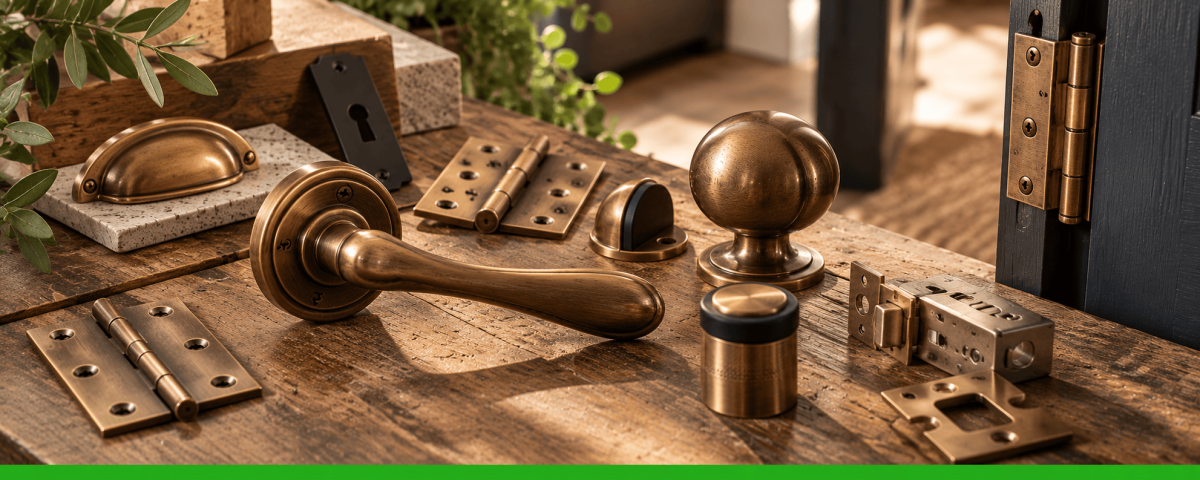
- Lever Handles - Available on a decorative backplate or a circular rose plate, ideal for modern and classic interiors.
- Door Knobs - Classic mortise or rim knobs suited to period properties or traditional timber doors.
- Pull Handles - Heavy-duty pull bars for commercial or grand entrance doors, paired with keyhole covers (escutcheons) for a neat finish.
Don’t overlook the importance of the right type of lock for the room in question. Options to consider include:
- Tubular Latches - The standard spring-loaded mechanism used for non-locking internal passage doors.
- Mortise Locks & Bathroom Locks - Locks cut directly into the edge of the door, operated by keys or thumbturn release mechanisms.
- Nightlatches & Deadlocks - High-security lock options primarily used for external front and back doors.
Alongside the hinges of your choice, you should consider looking at door accessories to help complete the look perfectly. Choices to consider include:
- Door Stops - Wall-mounted or floor-mounted stops that prevent handles from impacting adjacent walls.
- Door Closers - Overhead or concealed mechanisms that automatically control the closing speed of fire or heavy internal doors.
- Letter Plates, Flush Bolts, & Finger Plates - Protective metal plates and secondary fixings that preserve door surfaces in high-traffic environments.

What Ironmongery Do I Need for an Internal Door?
When considering the ironmongery you need for an internal door, you’ll need to start by looking at the location of the door and what level of privacy the room requires. However, as a minimum, a complete internal door ironmongery set includes:
- A Pair of Handles or Knobs - For operating the latch mechanism.
- A Latch or Lock Mechanism - A simple tubular latch for passage doors, or a mortise lock/bathroom lock with a thumbturn for private spaces.
- A Pair (or Trio) of Hinges - Standard timber doors usually require two to three 3-inch or 4-inch ball-bearing hinges to prevent sagging.
- A Door Stop - Essential door fittings like floor-mounted or wall-mounted stops protect your architraves and plasterwork from impact damage.
What Ironmongery Do I Need for an External Door?
Although an external door requires many of the same elements, there are extra factors that you should take into consideration. External door hardware you should consider includes:
- High-Security Locks - Front doors require robust locking mechanisms, such as a 5-lever mortise deadlock (often required by UK home insurance providers) or a multi-point locking system for modern composite and uPVC doors.
- Heavy-Duty Hinges - External doors are significantly heavier than hollow internal doors. You will need three heavy-duty, weather-resistant stainless steel or brass ball-bearing hinges to support the weight and resist corrosion.
- Security Nightlatches - Often paired with a deadlock, a rim nightlatch (or "Yale lock") provides automatic latching convenience when closing the door behind you.
- Front Door Accessories - To complete the entryway, you'll need functional accessories such as a letter plate with a draught excluder, a door knocker, a spyhole (door viewer), and numeric house numbers.
- Weather Seals & Thresholds - Metal weather strips and threshold draught excluders prevent rainwater, wind, and cold draughts from entering under the door leaf.

How Do I Choose the Right Ironmongery for My Doors?
When looking at ironmongery for your doors, there are three main things to take into consideration – functionality, aesthetics and quality. Investing in commercial-grade or high-durability door furniture ensures smooth operation for years without surface tarnishing or mechanical wear.
Top Tip: Look for external hardware rated to BS 3621 (British Standard for locks) or PAS 24 for enhanced security that satisfies UK home insurance requirements.
From sleek modern lever handles to robust hinges and essential door stops, the right door fittings combine daily practical convenience with long-lasting style. Explore the full range at Ironmongery Experts to find the perfect hardware sets for your doors today.
What Is Ironmongery? FAQs
What does ironmongery include?
In modern contexts, ironmongery includes all functional and decorative metal fixtures used in construction and interior design. This encompasses door hardware (handles, knobs, hinges, locks), window fittings, cabinet pulls, access control systems, and external gate hardware.
What ironmongery do I need for an internal door?
For a standard internal passage door, you need a pair of door handles or knobs, a tubular latch, a set of hinges (typically 2 to 3 per door), and a floor or wall door stop. If privacy is needed (such as in bathrooms or bedrooms), you will also require a bathroom lock or privacy latch with a turn-and-release mechanism.
How do I choose the right ironmongery for my doors?
Focus on three main criteria: functionality (fire ratings, privacy requirements, door weight), aesthetics (matching the hardware finish to your interior décor), and quality. Investing in commercial-grade or high-durability door furniture ensures smooth operation for years without surface tarnishing or mechanical wear.